

The Swiss company Bally is one of the world’s oldest still existing luxury shoe and leather goods brands. After several difficult years, the company now appears to be facing its most serious crisis yet. Bally is under the supervision of the bankruptcy office, its Swiss production has ceased, and the owner has rejected an offer to acquire the entire business.
Founded in 1851 in Schönenwerd, Bally became one of Switzerland’s most internationally recognised companies, known in particular for its shoes and leather goods. They were quick with industrialising their production, and made stellar Goodyear welted shoes back in the days. They have kept their top range Bally Scribe being welted in Switzerland, even if prices have become very high. In recent decades, however, the brand has changed ownership several times and struggled to establish a clear and successful position in the luxury market.
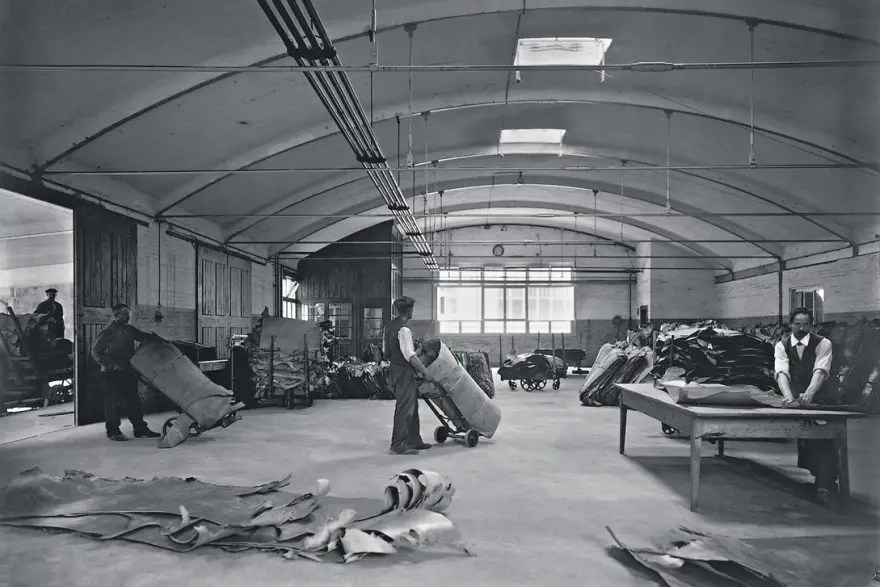
A Bally factory room where leather soles are stamped back in 1909.
In August 2024 the company was acquired by the American investment firm Regent LP from Germany’s JAB Holding. At the time, Bally reportedly had around 1,500 employees, annual revenue of approximately €200 million and debts of about €100 million. The workforce has since fallen to around 1,000, according to the Swiss business site Bluewin.
The situation deteriorated further this year. Bally ceased production at its Swiss factory in Caslano May, and the remaining 27 production employees lost their jobs. Most of the company’s Swiss stores have also closed. Only a small part of Bally’s shoe production had remained in Switzerland, with most manufacturing already outsourced to external factories, mainly in Portugal and China.

Vintage Bally ad. All pictures above: Swiss Info
Since mid-June, Bally has been undergoing provisional debt restructuring under the supervision of the Lugano bankruptcy office. Customers have noted that it hasn’t been possible to order stuff from Bally’s own website, which conicided with this. The current protection period runs until October 15, while a court-appointed administrator examines whether the company can be restructured, reach an agreement with its creditors or must enter bankruptcy, writes the shoe business magazine Shoez.
At the same time, a Lugano court has blocked an attempted transfer of the Bally trademark to Aare LLC, an American company established only in May. Swiss media report that the court intervened amid concerns that Bally’s most valuable asset could be separated from the indebted operating company, leaving fewer assets available to its creditors. These suspicions have not been proven though.
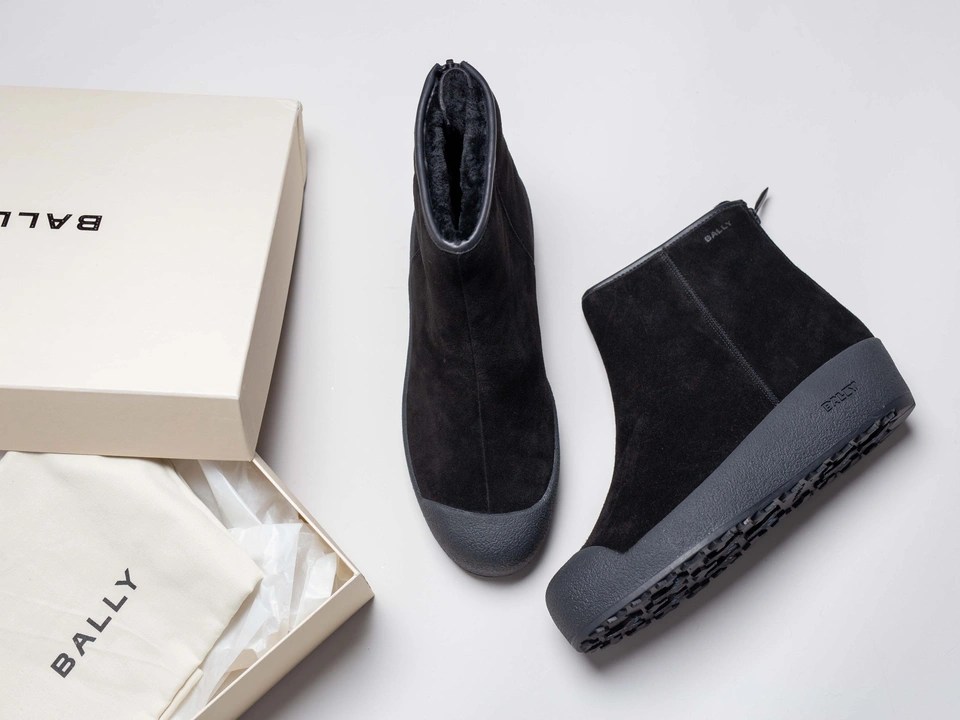
In the Nordic region where I live, Bally’s curling boots have been hugely popular for decades. Picture: Skolyx
Swiss businessman Roberto Martullo, who previously sort of saved the Swiss footwear brand Künzli, has offered to buy the entire Bally group, including the trademark, remaining stores, machinery and facilities in Caslano. Current owner Regent rejected the proposal, although Martullo says that he remains willing to negotiate and would aim to restart shoe production in Switzerland as soon as possible.
The future of Bally is therefore highly uncertain. It’s a shame this didn’t go through, it sort of makes sense to me to see a strong Swiss owner being the best possible solution for Bally, so I hope that some solution like this will become a reality.


Like Ferragamo Ive always had a soft spot for Bally brand. They did afterall help develop advanced materials used for the outer soles of the lunar overshoes worn by Neil Armstrong and crew, Something they should lean into more like Omega & the speedmaster.
Sad news. I really like the look of them, but have not ever worn them. Maybe I should buy a pair while they are still available.
I have heard that they can be slippery on ice/snow. Is that true? Stockholms compacted slush streets were a nightmare in my Dainite soles last winter
Allan Donnelly: Yes, it’s big players like Bally that often have been vital in developing certain things. And agree that they could certainly make more of stuff like that.
Hannes: If you mean the Curling boots, they are great in winter, it’s Vibram’s arctic grip soles. Dainite is notoriously bad in minus degrees, get rock hard. Vibram’s Eton or Dr. Sole’s version are better studded soles for winter wear.
I have been following this BALLY for many years. I’ve purchased many items, from shoes, to bags and ready-to-wear. Ive always been impressed with the quality of materials, and the impeccable craftsmanship. It has just been frustrating that after 185 years in business, they still seem to have an identity problem. It is unfortunate they have fallen under the ownership of Regent. Owner Michael Reinstein has no interest in keeping BALLY’S Swiss heritage intact. He only seems to have an interest in the retention of the name. He will then license the name out to others, so he doesn’t have to deal with the manufacturing aspect of the company. He has done the same thing with ESCADA. BALLY will now become a shell of its former self. I agree and hope a sale to Roberto Martullo will be successful. The company should be in Swiss hands.
*Correction. BALLY has been in business for 175 years. An amazing accomplishment for any company.
Andrew Morley: Yeah clearly it’s not been good ownership. Not sure where it will go, in October we hopefully know more.