

Time for the substantial review of all 25 competition shoes that entered this year’s World Championships of Shoemaking. Info about the makers and the shoes, comments, loads of pictures of the shoes and in some cases also the manufacturing process. A close look at some seriously amazing double monk straps.
Pt.2 with positions 11-25 can be found here.
Go directly to list of contestants.
Sorry for being a bit later than usual with this, just been so much going on with both my everyday job (Shoegazing is still a smaller part time thing) and everyday life so I struggle to keep up with everything. Nonetheless, here it finally is, and as usual there’s so much great craftsmanship and creativity to admire. Part of the London Super Trunk Show at the beginning of May was the sixth edition of the World Championships of Shoemaking (see here for more articles on this contest and find the summaries of previous year’s shoes), organised by Shoegazing, The Shoe Snob and Kirby Allison. The latter is also a funding sponsor of the contest, together with the book project Master Shoemakers, and private person Parker Schenecker, brother of the shoe aficionado Edmund Schenecker who sadly passed away a few years ago. These contribute with the substantial prize money of £3,000 to winner, £2,000 to second placed and £1,000 to third placed (so we organisers don’t make any money at all on this contest, the money is paid directly from the sponsors to the shoemakers). They also receive handmade awls by Phil Norsworthy, plus of course medals.
The top three double monk straps will also go on tour around the world now (together with a winning shoe in the patina championship), to be showcased for thousands of shoe lovers in various places. As we always try to do it, it’s a mix of some new locations and stores, and some that have been part of the tour previous years. The shoes will also be showcased at the New York Super Trunk Show on October 4, and at the first Singapore Super Trunk Show on January 31 2026. The preliminary tour schedule is as follows:
| Week | Date | Store | City, country |
| w34-35 | Aug 18-31 | Old House Provisions | Washington D.C., USA |
| w37-38 | Sep 8-21 | Kirby Allison | Dallas, USA |
| w40 | Oct 4 | New York Super Trunk Show | New York, USA |
| w41-42 | Oct 6-19 | Leffot | New York, USA |
| w43-w46 | Oct 25-Nov 16 | Isetan Men’s Tokyo | Tokyo, Japan |
| w48-w49 | Nov 24-Dec 7 | Bridlen Gallery | Chennai, India |
| w2-3 | Jan 6-19 | Unipair | Seoul, South Korea |
| w5 | Jan 31. | Singapore Super Trunk Show | Singapore |
| w6-7 | Feb 2-15 | CNES International | Singapore |
| w9-10 | Feb 23-Mar 8 | Skomaker Dagestad | Oslo, Norway |
| w12-13 | Mar 16-29 | The Hand | Amsterdam, Netherlands |
Worth noting is that we’ve already announced what the style will be for next year: A black chelsea boot, with relatively free possibilities for design. And we will also include a new criteria that will be judged Originality, which will give 5 points max per jury member. This is to award those who think new and continue to push creativity and craft to new heights. We’ve seen that what’s been done by top shoes previous years – where the horseshoe heel probably is the strongest example – tend to be popular for coming years, and cumulatively a lot of features continue to be used more and more. We think it’s important to progress also beyond this. We will also be more strict on the width limitations set (max two width sizes up or down from an acceptable standard width), and if this isn’t clearly followed there will be deductions of points.
At the London Super Trunk Show all competition shoes were on display for the over 1,300 people who visited the event during the day, and at the award ceremony in the evening the top ten were presented. The shoes and the competition always gain a big interest and admiration, and also afterwards the attention has been large. Not least with a big feature on the BBC News morning show World Business Report, which was viewed by millions of people in UK and around the world (more on that in this article).

The jury gathered at The Valet in London (except a couple who had already left).
The day before the event the shoes were reviewed anonymously by the jury, which consisted of (seen on the photo above, listed from the left):
Jean-Michel Casalonga, bespoke shoemaker
William Laborde, bespoke shoemaker
Emiko Matsuda, bespoke shoemaker
Sebastian Tarek, bespoke shoemaker
Saskia Wittmer, bespoke shoemaker
Athanase Sephocle, bespoke shoemaker at Berluti
Daniel Wegan, bespoke shoemaker
(Kirby Allison, sponsor, founder of the Kirby Allison store)
Gary Tok, sponsor, author of Master Shoemakers
Jesper Ingevaldsson, Shoegazing
Justin FitzPatrick, The Shoe Snob
The criteria that were set out for the competition shoes were as follows:
– Cap toe double monk strap model, with two straps made of the same piece of leather that covers the facing, attached to two buckles, 2-4 pieces of leather, decorative stitching is okay but not necessary, no brogueing or punched holes.
– One left shoe, size UK8 (or corresponding size), maximum 2 width sizes up or down from an acceptable standard width.
– Smooth dark brown calf leather, box calf or aniline dyed, no patina.
– Leather sole.
– Hand welted, handmade sole stitch. The shoe has to have a 270° welt, so there has to be a waist and the welt with the sole stitching should go all the way to back the heel (although it can of course be hidden blind welt at the waist).
– Dark brown sole and heel edges, natural coloured bottom (decorations with for example wheels or nails are ok, but no dye or burnish).
– Finished inside of the shoe, with sock lining etc.
– No branding.
– Due to practical reasons, we may not fully remove potential shoe trees for the jury review, but the shoe trees won’t be part of the judging.
Errors in respect to the above specifications resulted in deductions of points, 5% deduction of total points for small errors, 10% deduction of total points on larger errors. If the shoe would not follow specifications at all, it could be disqualified, but have never been the case yet.
Competitors could enter both as a company or as a person. All persons that have been part in the making of the shoe should be stated, and which process(es) each person have made.

World champion Louis Lampertsdörfer at the award ceremony in London. See his masterpiece below.
Criteria that was judged:
Degree of difficulty (maximum 10 points per jury member)
Jury look at how complicated construction methods that have been used, how advanced they have been built both in large and in smaller details, etc.
Execution (maximum 10 points)
Jury look at how well the various parts of the shoe construction have been made, how neat and clean the work is, how well executed the level of finishing is, etc.
Design / aesthetics (maximum 5 points)
Jury look at the overall aesthetics of the shoe, proportions, balance etc.
So, below first the full list of results, then a walkthrough of all competition shoes, from position 1 to 25 (1-10 in this post, 11-25 in the other article linked in several places here). It’s highly recommended to look through things thoroughly, study the photos etc, to really appreciate things. We see the progress that the overall level is pushed upwards all the time, even if absolute top level has been similar since the start. It’s definitely harder to finish say 10th now than it was the first years of the contest.
There’s more pictures and text on the top position shoes (even if I tried to shorten this a bit as well, to make it more accessible), with so many entries I have to do things a bit more condensed to make it workable, but all have a brief summary and at least four pictures of the shoes from various angles. In some cases of the top ten shoes I’ve also included pictures of the making process. Click the pictures to see larger versions.
.
Results
(Click on maker/brand to go directly to summary, go here for positions 11-25)
1. Louis Lampertsdörfer
2. Ken Kataoka
3. Ken Hishinuma
4. Emi Liao
5. The Last Shoemaker
6. Reo Okuda
7. Stato Martinelli
8. Acca
9. Kim Junghwan
10. Kodai Kawasaki
11. Yasunari Shimozaki
12. Dmitry Avdyukhov
13. Paul.B.d.n.
14. Hwang Taewook
15. Valerio Frattari
16. Valentin Jardé
17. Teruo Hoshino
18. Fausto Ripani
18. Giovanni Lorenzo
20. Gagik Hakobyan
21. Fabula Bespoke Shoes
22. Kulsiri Kamonpakorn
23. Tieshidani
23. Grace O’Leary
25. Yusuke Tsuneda
.
1. Louis Lampertsdörfer

The winning shoe.
Third time’s the charm, as they say. After finishing sixth with his first entry back in 2019 when he was still just an apprentice, and third second time in 2023, this year Louis Lampertsdörfer from München, Germany, took the crown. His winning double monk strap is a proper beauty, elegant and sleek, and of course crafted to perfection. Designed with a V-shaped cap toe and sweeping balmoral line, with subtle hand braided decoration seams. Raz Maftei did the incredible closing of the upper, the goldsmith Sebastian Schober made the lovely buckles and toe tap, the rest was made by Louis.

Sole with decorative inlay aligning with the upper, and a slim horseshoe heel.
The heel and back is clearly inspired by previous top shoes, with a very thin-walled horseshoe heel and a ridge back that continues up over the back of the upper, where the heel stiffener is made to keep this shape. Along the outlines of the top heel lift runs rows of very thin 0,5 mm nails. An insert made of the same leather as the upper with the same decorative stitching brings things together nicely. The upper consists of one seamless main piece. One of the most impressive features is the thin sole and super fine, well-made sole stitching at 30 spi (stitches per inch). Really feels like old-school exhibition and prize work.
As always have been the case for the winning shoe, it scored high on all the three criteria that were judged: difficulty, execution and design / aesthetics. Worth mentioning is that it was the tightest podium we’ve ever had, with just 5 points between gold and bronze placed shoes (225 vs 220). Louis Lampertsdörfer estimates that about 200 hours has been spent on the making of this class act of a shoe, which certainly was worth it in the end.

30 spi sole stitch.
Louis Lampertsdörfer is based in the German city Munich. As mentioned he’s not new to the contest, and it’s important that also top placed makers continue to enter if we want this to stay relevant long term, so we’re happy Louis is one of those. He started his shoemaking journey properly was an apprentice and later worked at the bespoke department of Gaziano & Girling in England.
Nowadays he runs his own brand Mogada, where he offers fine top-class bespoke. In recent years he has also developed a small hand welted RTW / MTO range, hand welted in Italy and then finished by him, as well as a small leather accessory collection. You can book appointments in Munchen of course, but he also regularly do trunk shows in other locations in Europe, like Amsterdam, Paris and Brussels. The shoemakers who’ve won the world champs tend see an increase in orders so if you’re interested can be good to catch him soon before delivery times potentially go up.

Soft square toe.

Lovely profile.

Ridge back.

Beautiful silver buckles made by the goldsmith Sebastian Schober. The cracks in the polish on the side happened when we removed the quite snug shoe tree ahead of the jury review.

Toe plate also in silver.

From the outside the sole looks really sturdy.

Superb closing work by Raz Maftei.

Close-up of the insert.

Thin lifts builds up the heel.

Sleek.
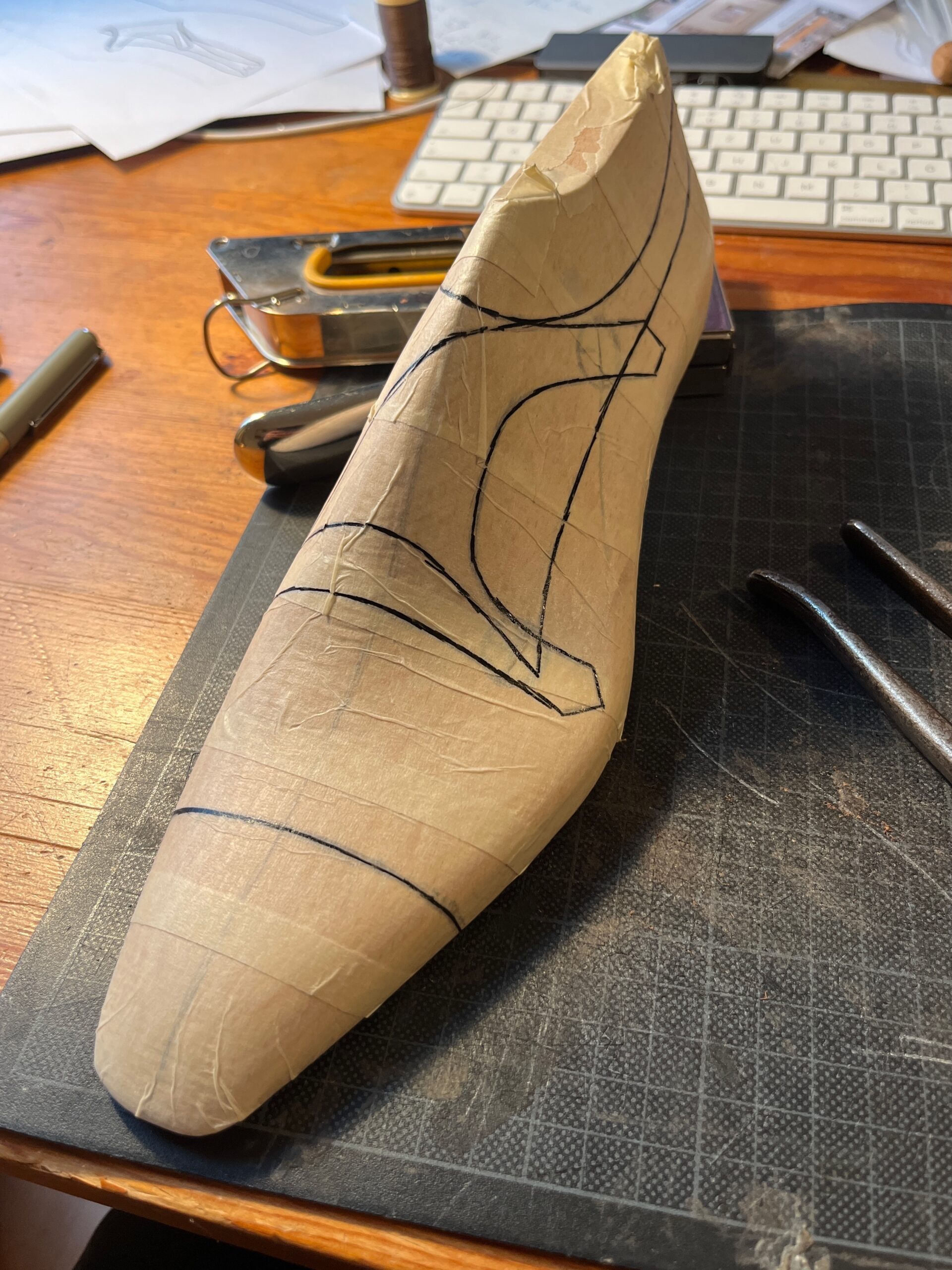
Some photos taken by Louis Lampertsdörfer from the making of the shoe. Here’s a sketch of the upper on the last.
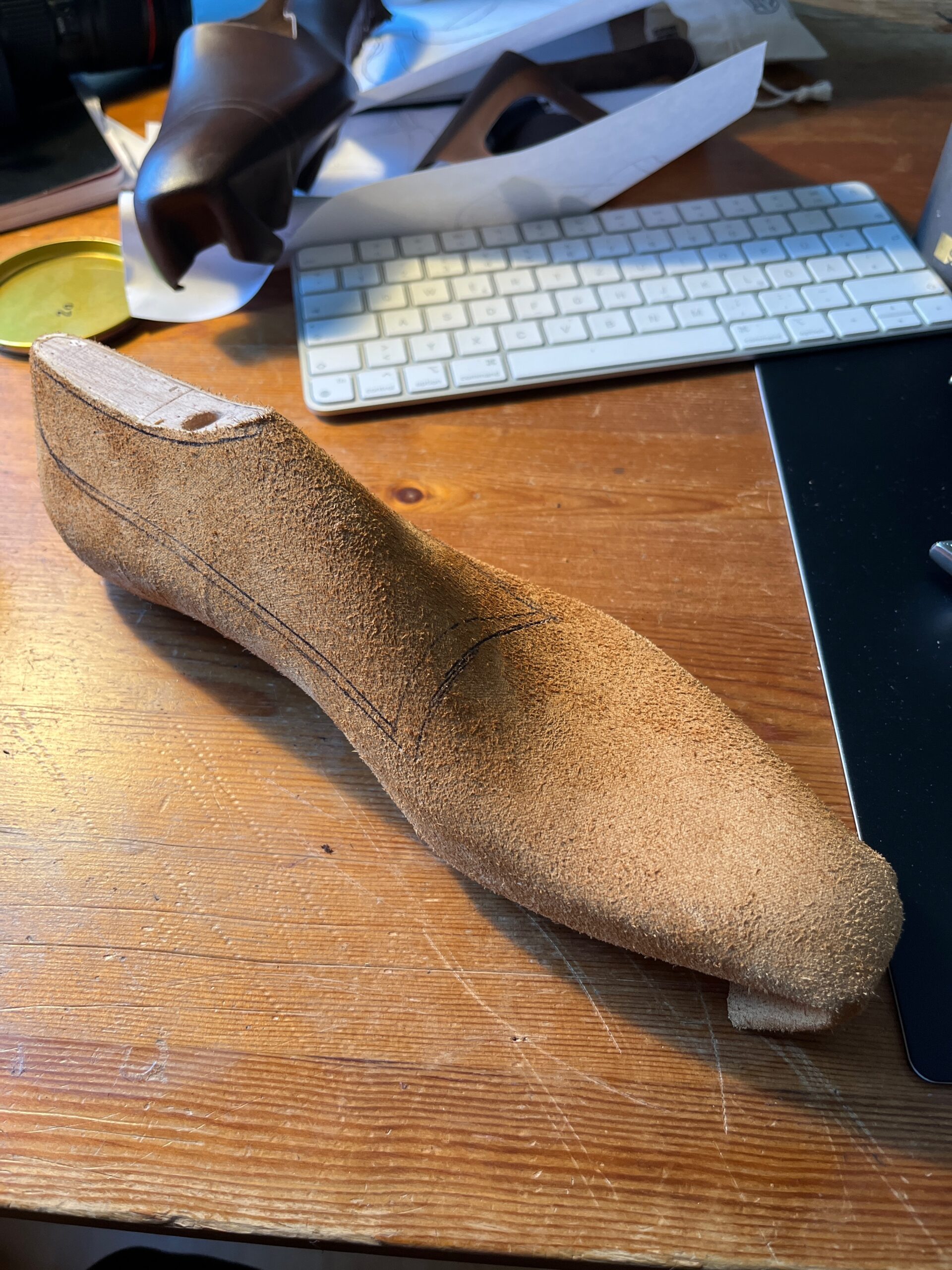
Seamless lining.

Here’s from the goldsmith workshop, working on the buckles.
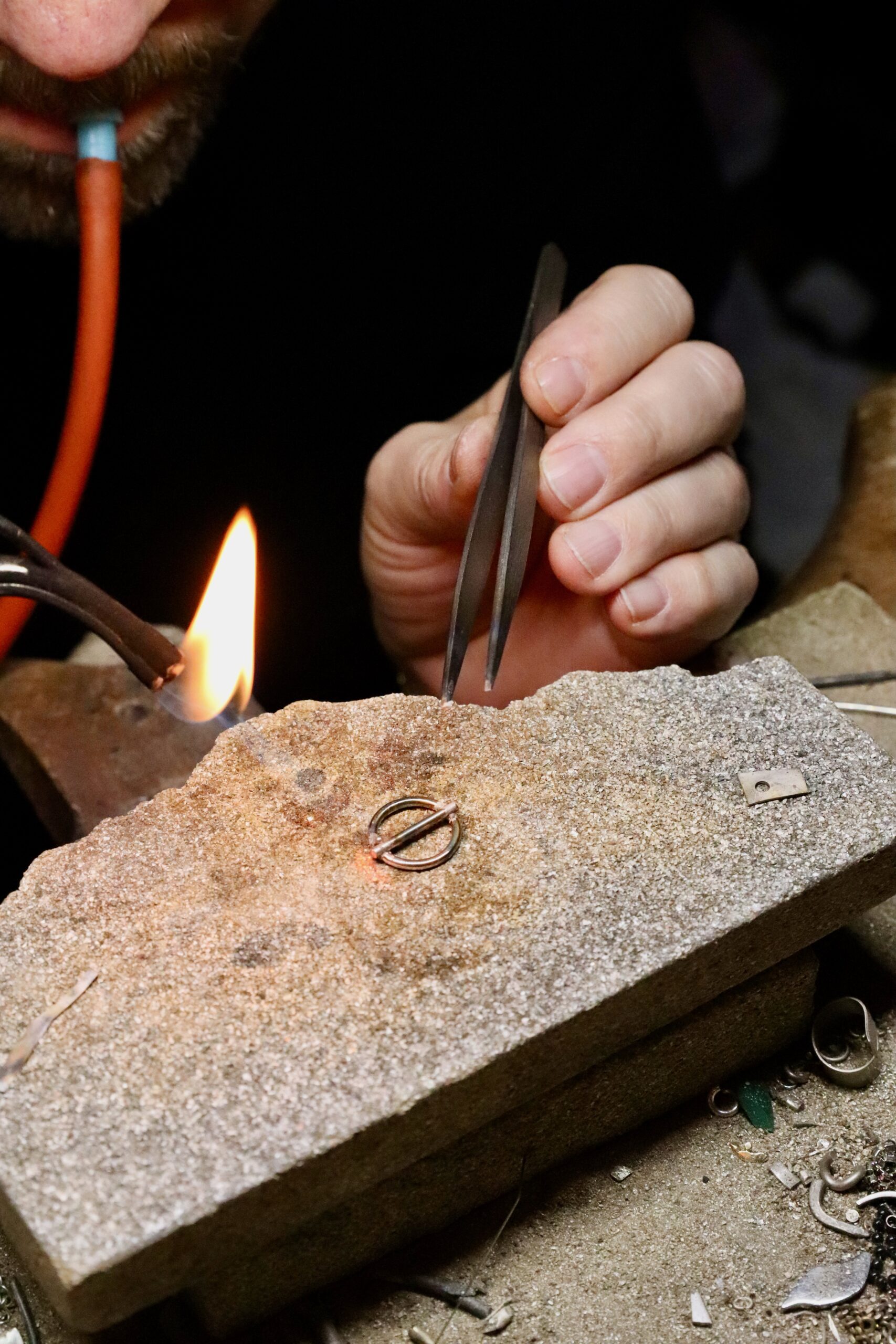
Different kind of craftsmanship.
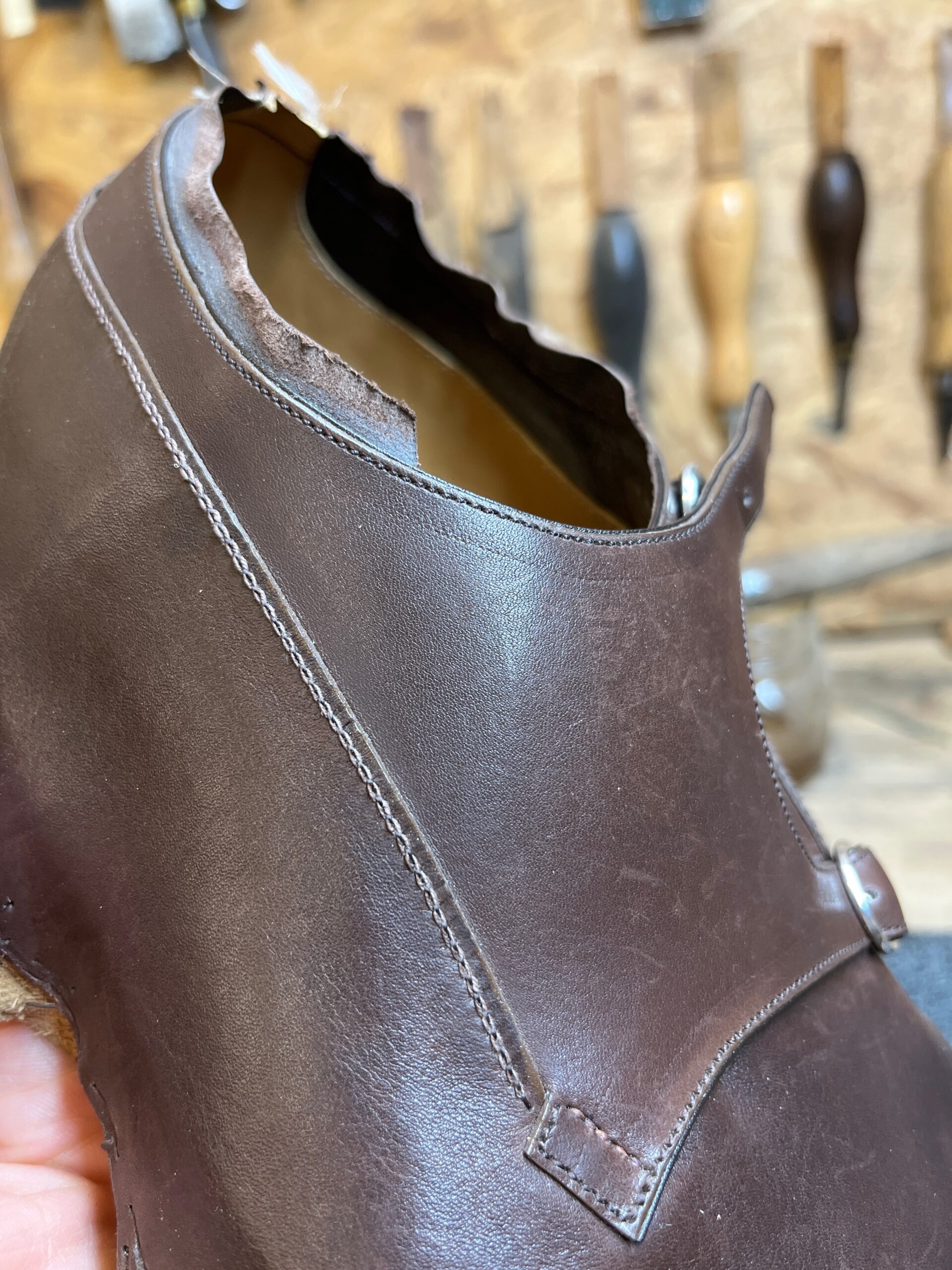
Upper has been pre-lasted.
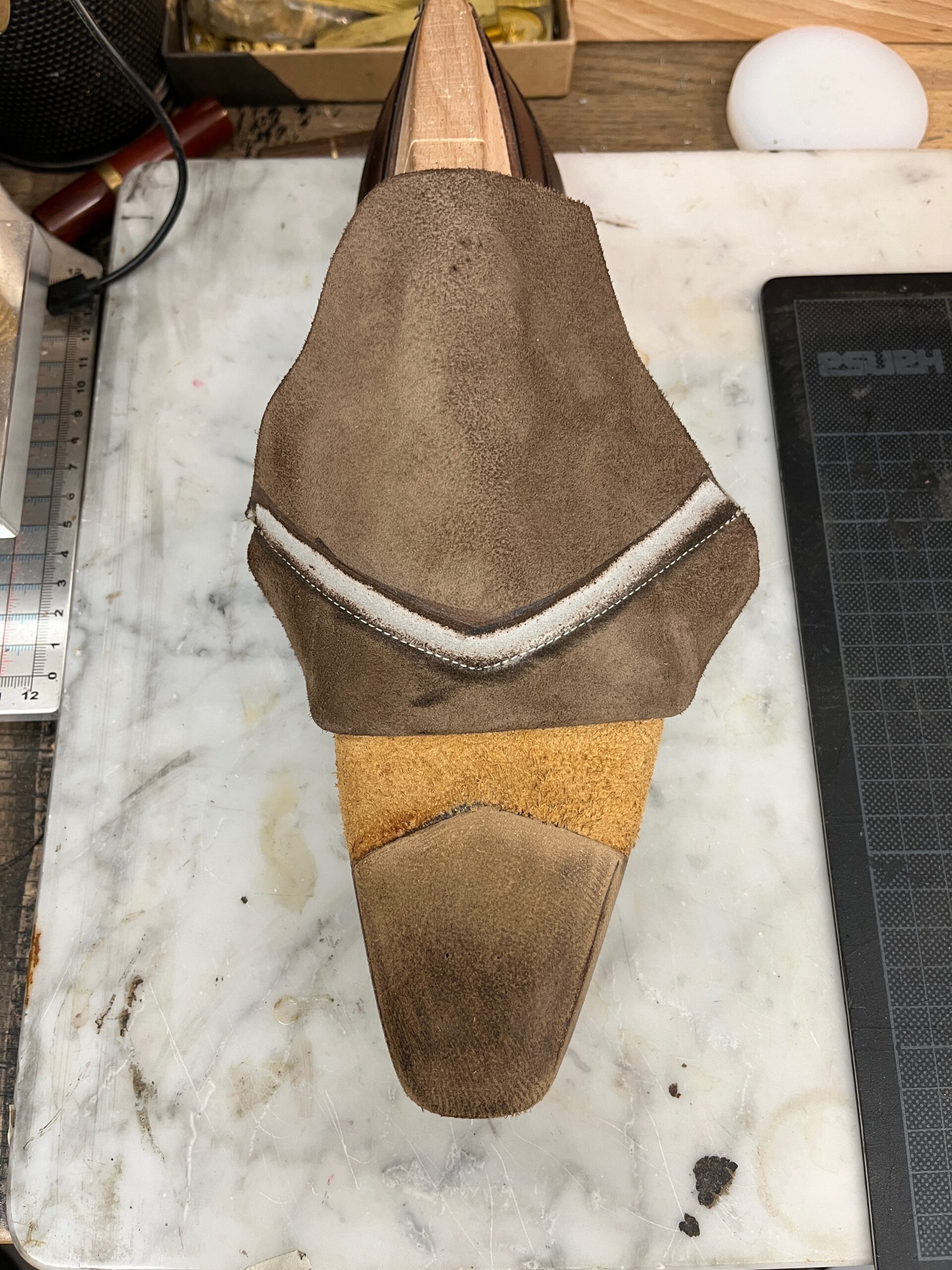
Stiffener in place and lasting about to go into the final part.
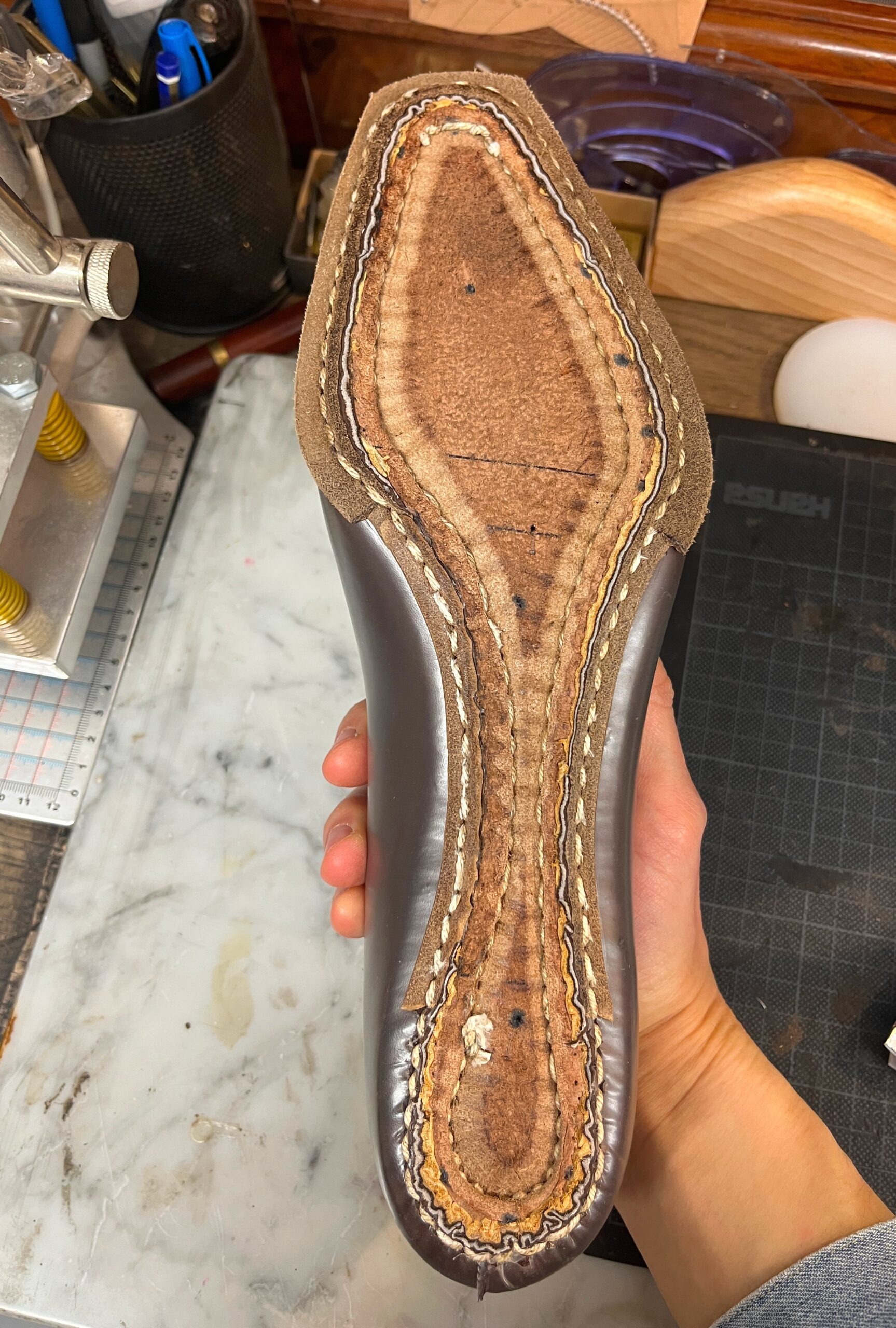
Welting done.
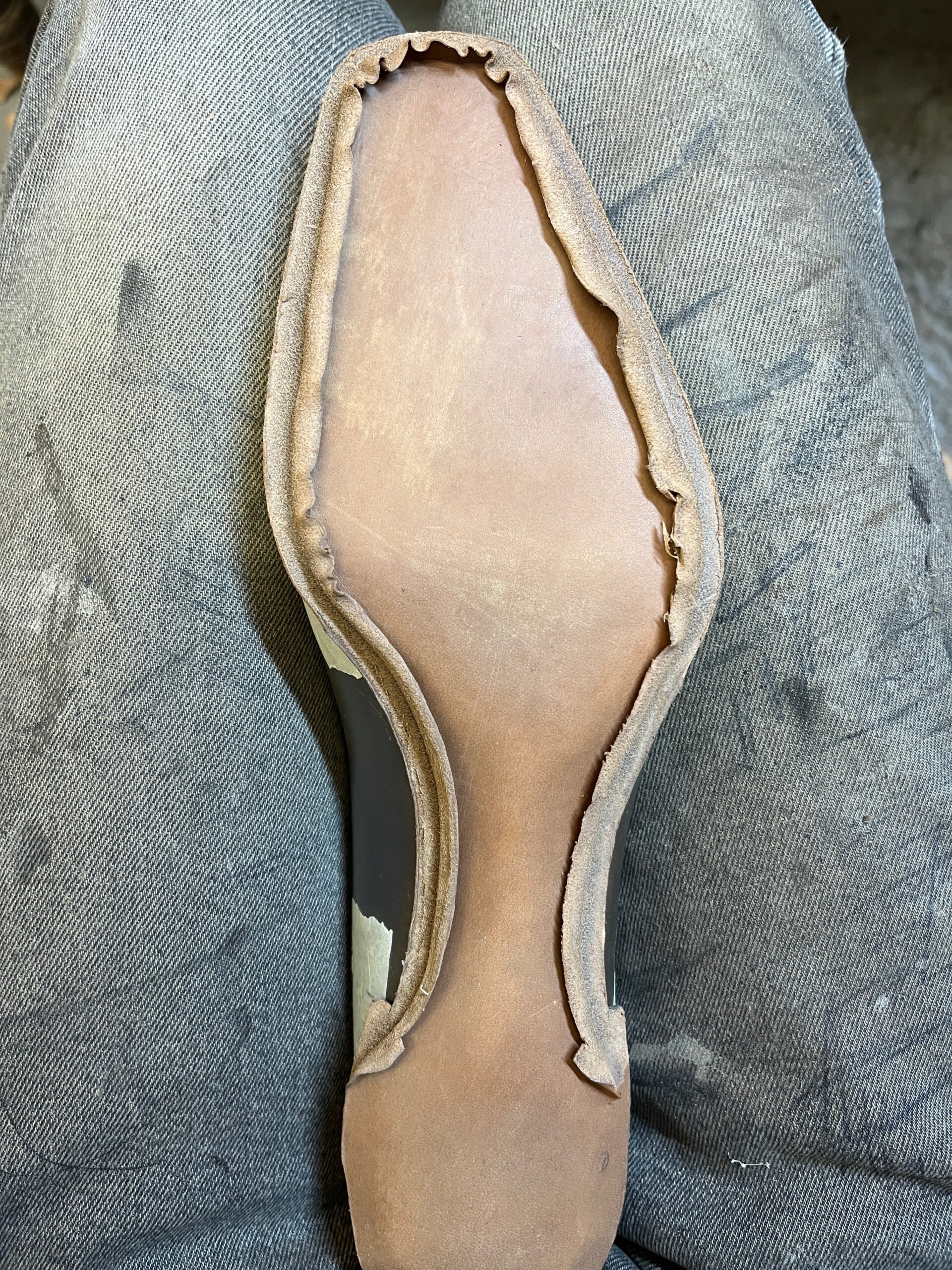
270° sole stitching, as required.
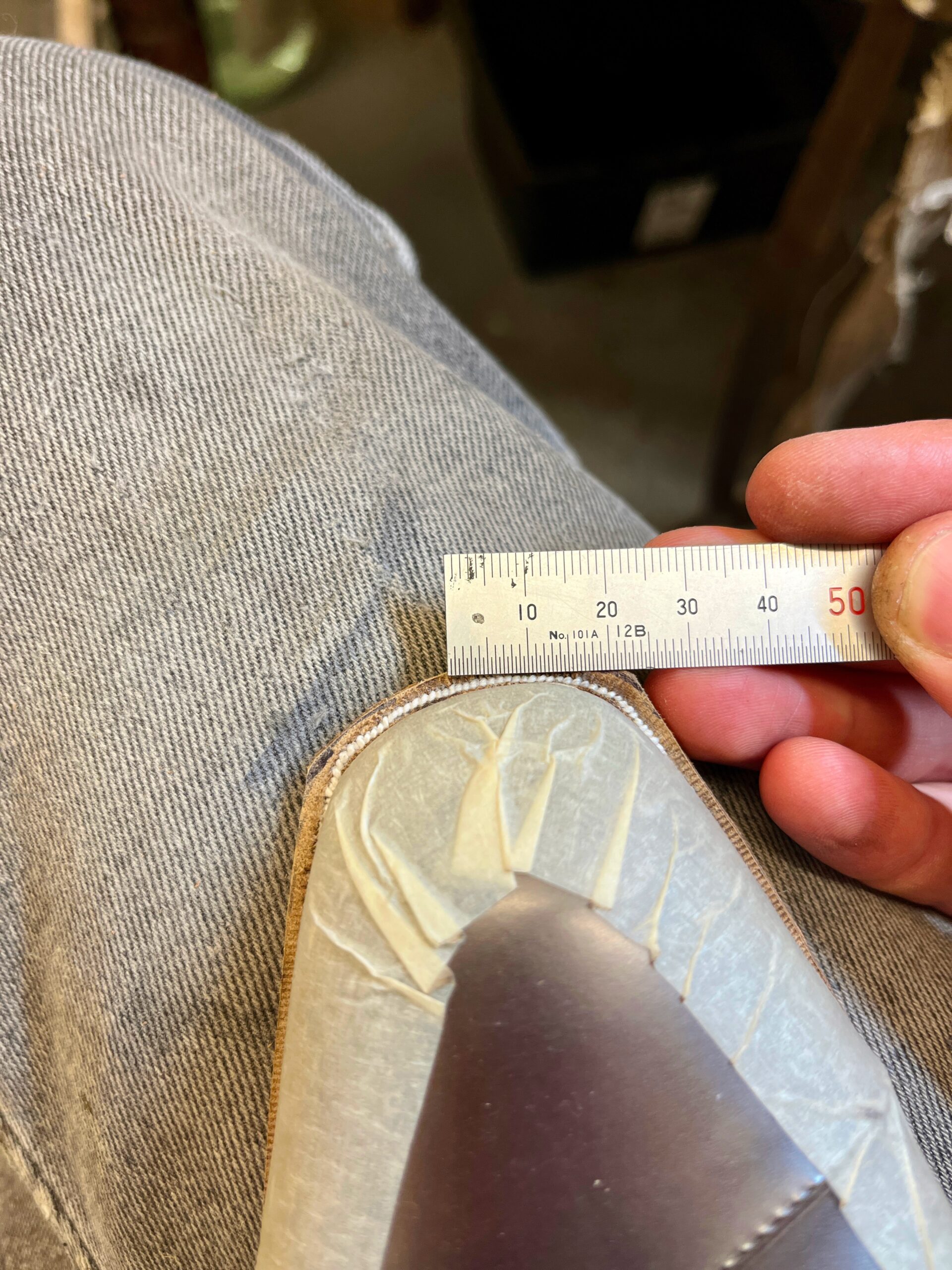
Stitching before fudging and finishing of the welt.
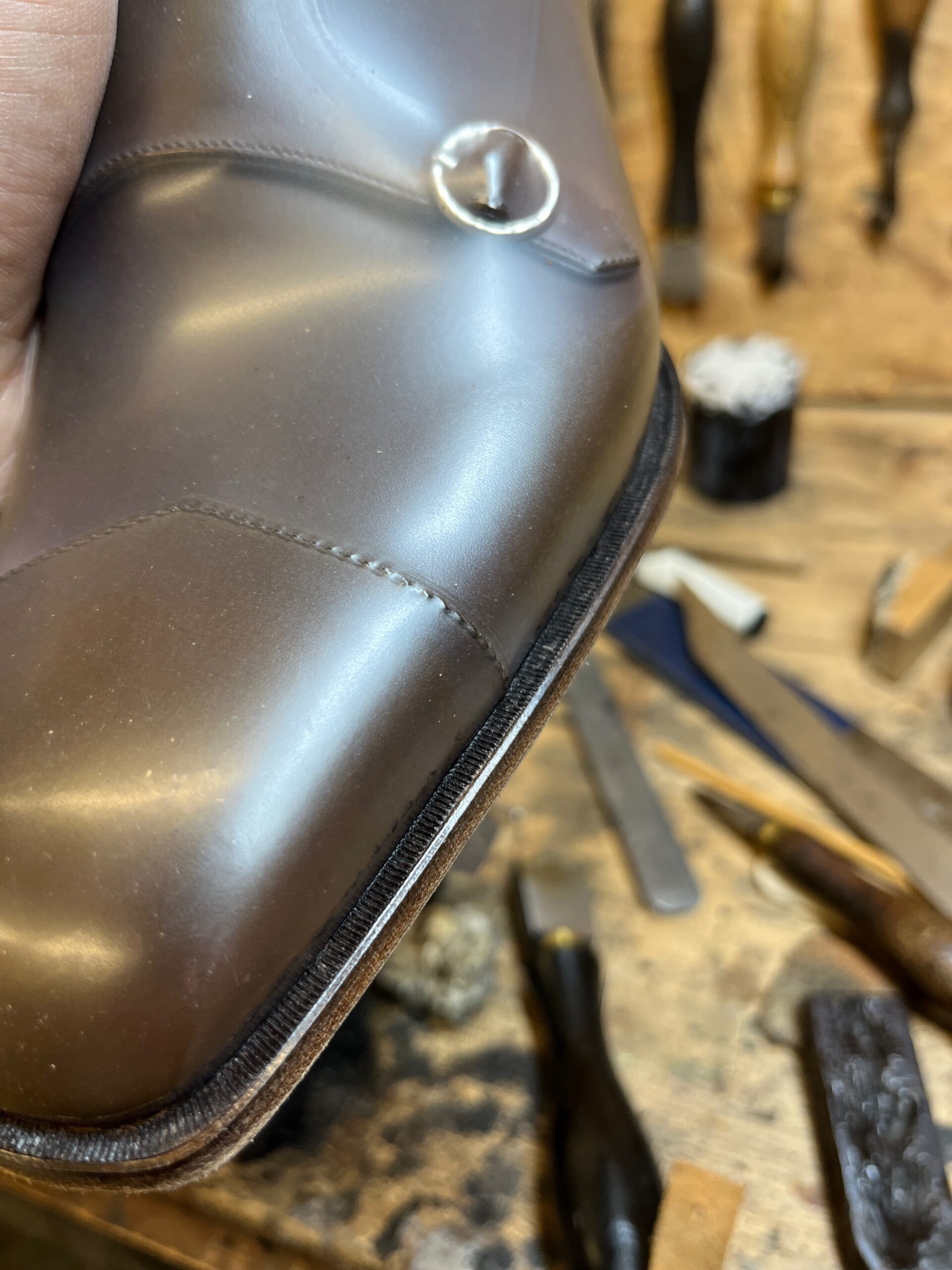
Here’s after.
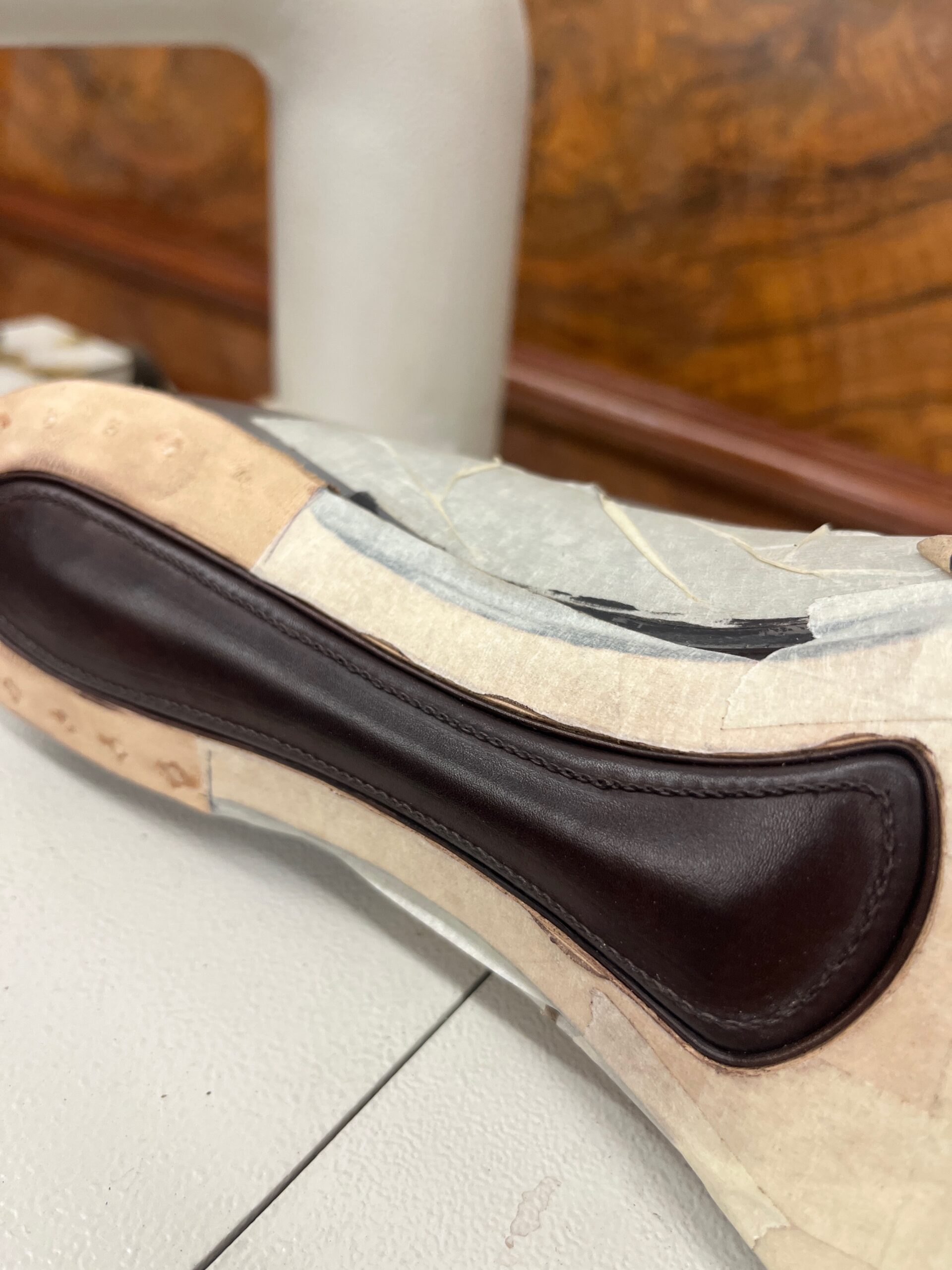
The waist insert in place.
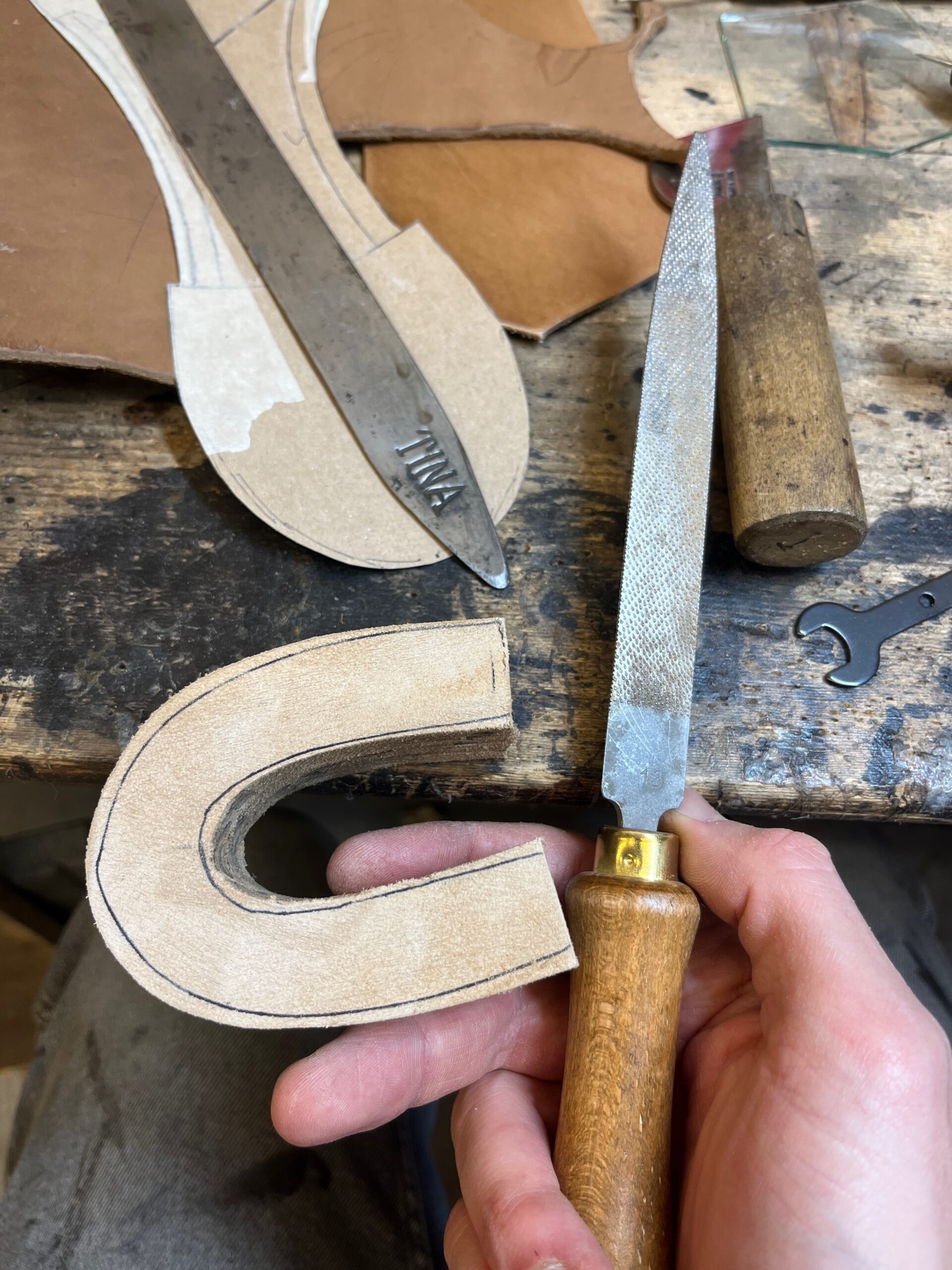
Pre-building the heel.
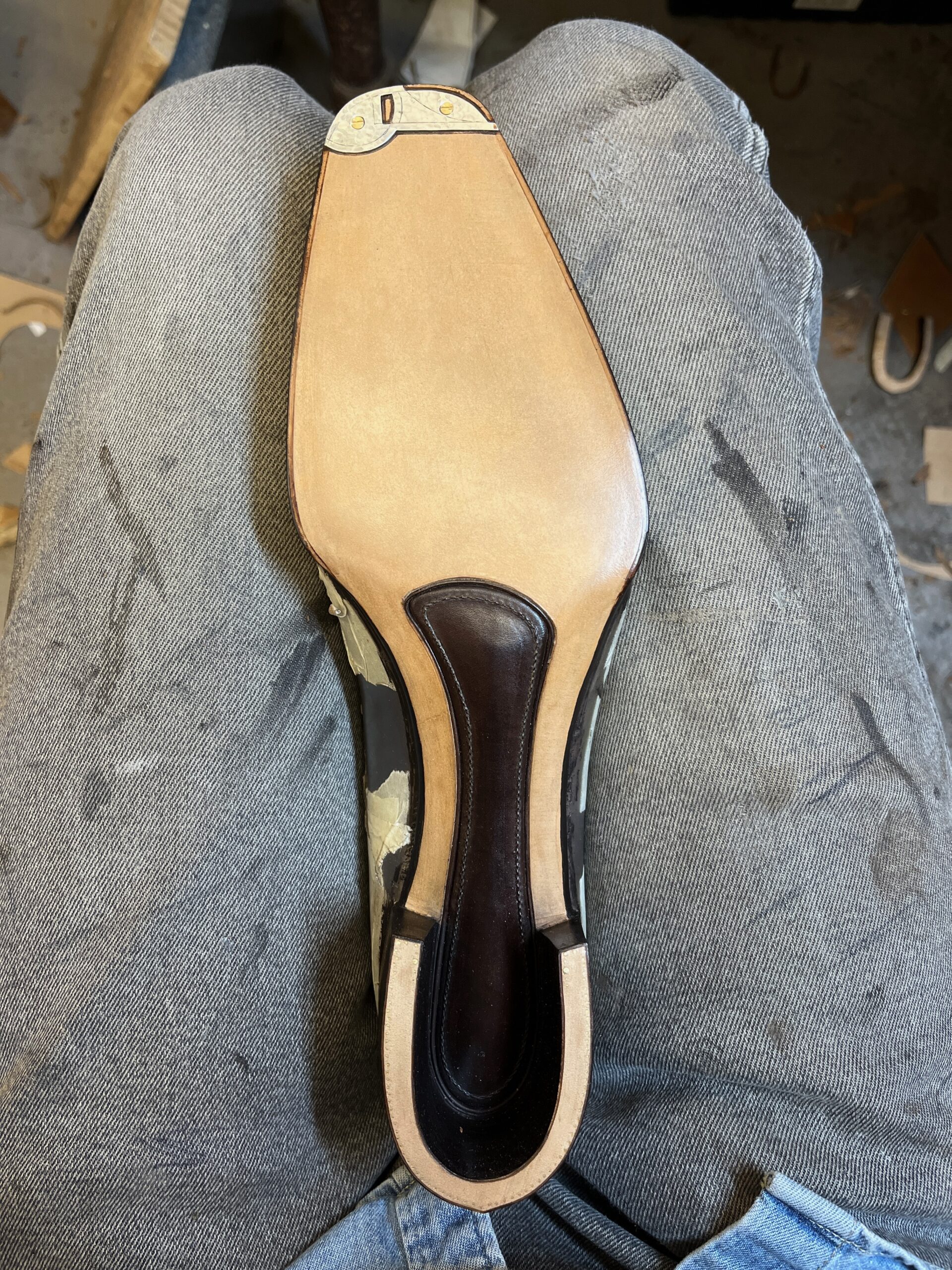
Close to being finished.
.
2. Ken Kataoka

A real exhibition piece.
Ken Kataoka of Japan was back for the title, after finishing second in 2022, but he narrowly missed out and once again had to settle for silver. His shoe was the favourite among several jury members – and visitors in London – though. What’s positive is that we can hope that he will bless the contest soon again with another superb shoe to try and finally get that gold. Ken is one of those makers that really push things with his entries and do stuff that immediately catch your eyes. Ken did all of the work himself.

Bottom with character.
For those who remember so was the 2022 shoe the one with a very high heel and floating front part. This time the heel isn’t as high, but it’s certainly a tall one and it’s incredibly well-made. Perhaps the thick finishing sort of hides how well it’s actually put together, one almost have to look from the inside to fully appreciate the superbly thin finely levelled lifts. Inside the horseshoe heel, as buckles and toe tap is parts he has disassembled from vintage jewellery.
The waist is super narrow and not connected with the heel, but it is indeed a 270° welt and stitching. Upper stitching is excellent, truly, with contrasting stitching in decorative patterns and very tight to edges. Also here a very thin outsole with fine sole stitching. It’s in many ways a lot like historic contest shoes. Scored high on all areas.

A proper heel.
Ken Kataoka is a Japanese maker based in Tokyo, in Asakusa, the shoe district. For several yeaars has worked under the brand name Siroeno Yosui but plans to use his own name going forward. He has learned shoemaking among other things at the shoemaking school of Noriyuki Misawa. He runs one of the largest YouTube channels in the world showcasing bespoke shoemaking, a channel he runs together with his brother who films and edits.

Vintage jewellery remade to among other things buckles, and unique design of the straps that blends well with the overall design.

“Toe tap”.

Special solution.

Narrow last.

Forward leaning stance for sure. Also here a seamless

Heel from the back.

Heel from the inside.

Great closing work.
.
3. Ken Hishinuma

Five points away from the win this time.
For the first time a world champion enters the contest again, and he does it the year directly after his win. Ken Hishinuma of Japan won the gold medal last year with a stunning shoe, and the fact that he is back (also after making a twin to last year’s winning shoe in between) with a new superb shoe is quite incredible. Certainly shows dedication to craft these exhibition pieces.

A very good looking underside.
Ken’s double monk strap has a classic base, but with plenty of playful things going on and stuff that increased the difficulty score. For example a lot of the upper stitching is handmade, with subtle contrasting threads, super neat work. The heel is perhaps the most beautiful one of the whole contest, with a great shape and build, crowned with the row of nails and a unique brass metal inlet as the icing on the cake.
The sole edge is a two levelled thing which is very neatly constructed and executed, and just gives the shoe a bit more strength. And if you closely examine the upper pattern it’s a really intricate large piece which stands as the base. A shoe that may look rather basic at first but the more you look the more stunning parts you discover. Execution at the same top level as last year.

The two levelled sole edge.
Ken Hishinuma runs the shoe brand Khish the Work. He is based in the central parts of Japane, in the woods outside Hokuto City, Yamanashi prefecture. Khish the Work offers MTO and bespoke, and especially his more casual designs are perfect fot todays day and age, Ken clearly has a great eye for design. He has one of Japan’s largest YouTube channels on shoemaking, called Crazy about Shoes.

Such a lovely heel.

Decorative sock lining.

Soft square toe shape.

Nice lines.

Fantastic hand stitching.

Buckle piece rather classic.

Four rows of stitching.

Photos of the making, here’s the large upper piece in progress.

Hand work.

Cap toe.

Welted.

First sole stitching done.

Second finer sole stitching in the work.

Heel in the making.

Cut out for the metal inlet in the heel.

Almost finished.
.
4. Emi Liao

Uniquely and well designed.
A favourite design-wise for many in the jury, this beautifully toned down double monk strap with delicate small twists, like the wavy toe cap, gold details and fine buckles. Nifty little things like the charm one can open placed in the waist raises the experience of the shoe. The design explores the idea of time. It received highest score of all shoes on design/aesthetics, and also high on execution.

Classic and clean, with a personal touch.
Emi Liao is from Taiwan, but has been based in London for a few years where she’s been working at John Lobb London. Made by Emi Liao with technical support from Jiang “Dao” Daoyuan of Aria Badia, who came third last year, upper and pattern support from Hongni Lou, and some design support from Xiyun and Chamin.

Golden touch.

Top view.

Nicely designed.

Side view.

Hidden inside.

Waves.

A note.
.
5. The Last Shoemaker

No one that passed this shoe in London could stop themselves from looking closer.
The Last Shoemaker is a workshop based in Bangkok, run by Scotsman Allan Donnely. Last and pattern was made by Allan, hand embroidery by Jib Blouin, upper making by Mr. Rang and Mr. Hin did the bottoming. Crazily enough, this workshop was destroyed in a fire this spring, including their half finished contest shoe. What they called the Marshmallow Double Monk looked like a Toasted Marshmallow Double Monk, and when they decided to remake this in just two weeks time they kept that name.

Like a stairway down to the middle.
A spectacular shoe, obviously. Might be hard to catch in photos, but it’s enormous, and extremely heavy. Hand beaded decoration and buttons. Melted toe shape. Five layered hollowed out sole, made properly of veg tanned bends. A for effort for sure. Didn’t score the highest on execution, but good on difficulty and design/aesthetics. So shoes that are very special certainly can impress design-wise as well.

Hand beaded buttons and decoration.

Wide.

It has a proper breast.

A shoe that floats out.

A lot of sole stitches.

Inside view.

How the original entry looked like after the fire in The Last Shoemaker’s workshop.
.
6. Reo Okuda

A classic double monk strap.
One of those shoes that perhaps doesn’t look that special at first sight, but when you look close you find a lot to appreciate. Like the tight very finely made sole stitching, seamless upper part and well-balanced pattern. And, the amazing nail work in the heel with 148 0,5 mm thick nails.

A classic bottom.
Reo Okuda is based in Tokyo and has worked several years for a prosthetist and orthotist shoemaker. He has also trained bottom making and other things in shoemaking classes. He made all himself.

Superb nail work.


.
7. Stato Martinelli

The boat shoe.
Stato Martinelli is based in Desenzano del Garda by the Garda lake in Italy. It’s a relatively young company, founded by Paulo Martinelli in 2016, making MTM and bespoke shoes. The shoe was made in full by Paulo Martinelli.

Bottom.
As evident the design is inspired by a boat, and it’s a really unique piece with lots of great things going on, Norwegian stiched, seamless piece upper, lovely details. A lot of specially designed parts to appreciate. Scored levelled in all categories.

Tilted shape of the back.


Some making shots, here seamless upper base part.


.
8. Acca

Lovely shaped shoe, with refreshing fringes.
A shoe inspired by Gothic buildings and design. Seamless main piece of the upper, handmade buckles, intricate heel build. Great design parts like the fringes and the special cap toe seam. Scored really high on design particularly, even if of course good in other categories as well.

Almost looks like a Giorgio de Chirico painting.
Everything is made by Celia Huang who runs her own brand Acca, apart from the buckles that are made by Howe jewelry design studio. Celia studied art in Italy, and now has made shoes for two years, and already reached an impressive level of her work.

The cap stitch solution looks so good, should see it on customer shoes.


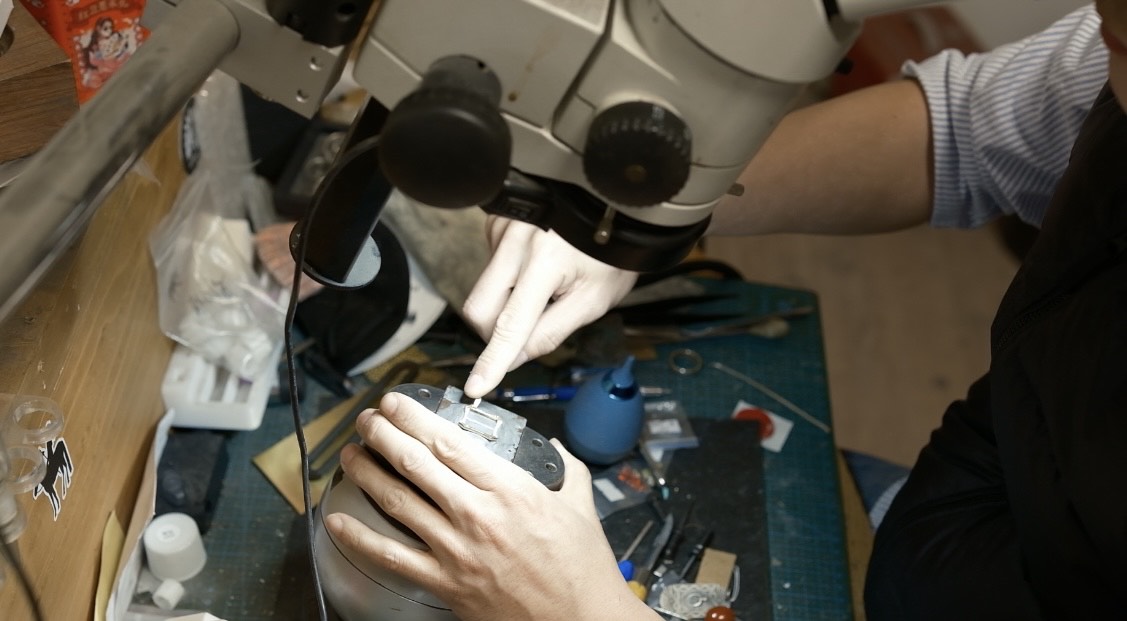
Some shots from the making. Here during work on the buckles.


.
9. Kim Junghwan

Unique design.
Kim Junghwan has worked with shoemaking for 13 years and runs a shoe factory that produces the brand Kyle Shoemaker, as well as private label for other brands. Still do shoes fully by hand as well though, and as evidently do that well.

Spade like feel.
He made the whole shoe himself, and despite receiving a 5% deduction for the use of more leather pieces than criteria stated, 2-4, he ended up top ten with this specially designed monk strap shoe with advanced sole stitching and a lot of fine handmade upper work.

Hand stitched parts of the upper.


Making photos. Interesting set-up of the holdfast.


.
10. Kodai Kawasaki

High heeled shoe.
Based in Tokyo, Kodai Kawasaki has learned the basics at various shoemaking classes in the city, and then spend time in Vienna to develop his shoemaking skills. He runs the brand Shoe Place by, with relatively playful designs.

From below.
His shoe is one of few high-heeled ones with a beautifully consistent shape of the heel and the back, fine handmade beading medallion, and an overall a well-executed shoe. Always beautiful to see the sole continue over to become the breast of a high-heel.

Impressive beaded medallion.


Tedious work making the medallion, with one bead at a time.


Continue to part 2 with positions 11-25 here.


A lot of interesting and impressive shoes! Always a treat these articles.
Paul Domnas: Great stuff indeed. Thank you!